Timothy Luciani, Ph.D.
Director & Principal Research Scientist · Publicis Epsilon
Resume (2 pages) · Full CV · tluciani21 {at} gmail {dot} com · GitHub · LinkedIn

Current Work
I build data products end to end. The one I spend my days on is DiME, built on Epsilon’s COREid identity graph and its 200M+ privacy-protected consumer profiles. It resolves a customer’s touchpoints across online and offline channels and shows clients and analysts what their marketing actually drove. I own the architecture and write production code for its systems layer, and I lead DSVA Systems, the team of four PhD research scientists who build the rest, one of whom manages a scientist of their own. In our department managers are expected to keep building, and that is the part of the job I would keep if I had to choose.
DiME’s reach has grown with the team. In 2024, total users rose 93%, unique users 64%, and unique companies 85% over the prior year, driven by third-party data integrations spanning more than 1,400 companies and 8,500 audiences. The platform’s audience segmentation and personas also fed the creative pitch behind a Fortune 500 retail account win.
Most of my recent work sits at the intersection of large language models and real-time, production analytics and visualization. My team builds retrieval-augmented generation systems over proprietary marketing data, surfaced through DiME as conversational exploration of audiences and personas. Behind that sits the evaluation infrastructure that makes the systems trustworthy: LLM-as-a-Judge harnesses, retrieval-quality benchmarking, and response-quality monitoring that let us assess deployments continuously rather than at release. At the end of the day our users never see this layer, which is the point of it.
The platform underneath is the other half of the job, and I build and run it: distributed processing across an enterprise-scale Hadoop cluster and Databricks, PostgreSQL at scale, Kubernetes, and GPU-scheduled Airflow for the clustering models that generate our personas. I also led our team’s data-governance program through audit, remediation, and verified closure across every production environment we own and operate.
I joined Epsilon in 2019 as a Data Visualization Scientist and was promoted three times to Director. I am one of three pod leads reporting to the VP of Decision Sciences Visual Analytics, and I serve on the Decision Sciences AI Steering Committee.
Before Epsilon I completed a PhD in computer science at the University of Illinois Chicago, working on problem-driven design for scientific visualization across oncology, computational fluid dynamics, bioinformatics, and astronomy. Different domains, same problem I work on now: making a complex system legible to the people who have to act on it. That work is below.
Selected Engineering Work current
DiME Platform
Identity-resolved marketing analytics on Epsilon’s COREid graph, 200M+ consumer profiles. Spark and Databricks processing, PostgreSQL at scale, Kubernetes with ArgoCD, GPU-scheduled Airflow across 7 GPU servers.
RAG & LLM Evaluation Stack
Retrieval-augmented generation over proprietary data, with LLM-as-a-Judge harnesses, retrieval-quality benchmarking, and continuous response monitoring.
Distributed LLM Inference Cluster
Four-node self-hosted inference fleet. Raspberry Pi gateway, Apple Silicon and dual Intel Arc GPU nodes, behind a Dockerized agent gateway over Tailscale.
Job Intelligence Pipeline
Python scrapers across Greenhouse, Workday and Ashby ATS APIs; semantic search over SQLite + sqlite-vec with local embedding models; cron-orchestrated.
PhD Research 2012–2019
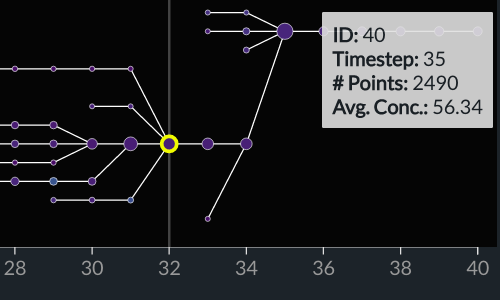
Details-First
Design model for CFD visualization: explore features first, context second, overview last.
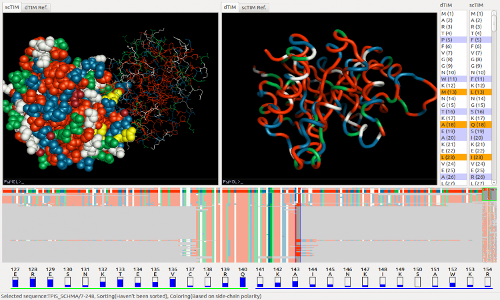
FixingTIM
Visual mining tool to identify functional mutations across protein families.
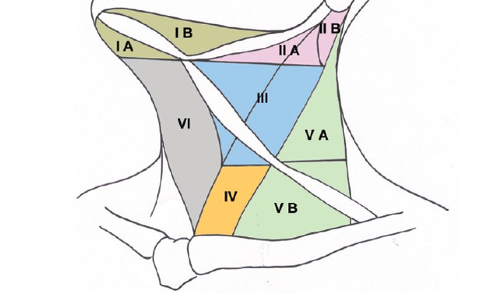
SMART-ACT
Cohort-based spatial similarity for radiation therapy outcome prediction.
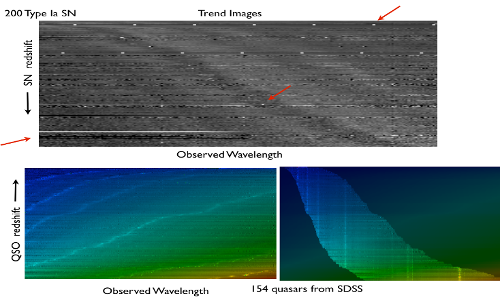
AstroShelf
Scalable web infrastructure for visual navigation of large-scale astronomy data.